
We are Societal Impacts of Digital Twins Special Interest Group (SIG).
We are a sub group of DTNet+, which is a UKRI funded, UK-wide inter-disciplinary research network.
We aim to facilitate research advancements that will contribute to the next generation of intelligent, resilient, and trusted Digital Twins.
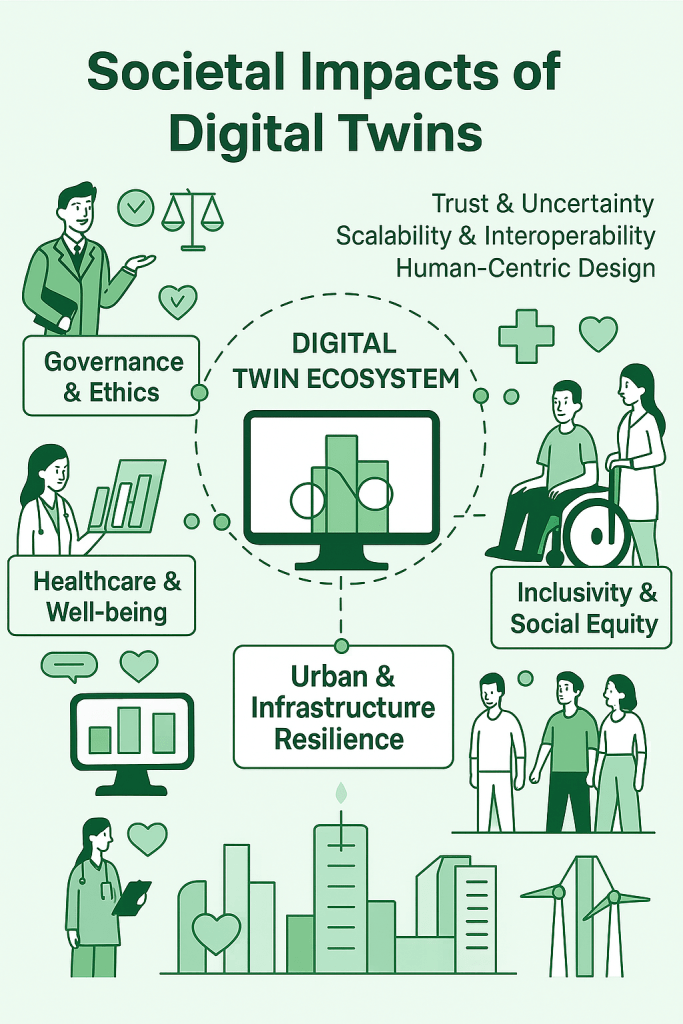
Topics of Interests
Digital twins and related solutions are becoming pervasive tools in many aspects of modern life, from urban planning to healthcare to heritage and nature conservation.
But what implications does this have for the way society functions, how decisions are made and how we are governed? Who should have a say in designing these tools, and how should they be engaged? How do we reflect on the inherent biases in data, and guard against the harms this could cause? To what extent are we willing to delegate decision-making responsibility to the ‘machine’, and where do we need to retain the ‘human in the loop’?
Societal benefits for the following areas, as examples, are explored:
Health and Personalised Medicine
Digital Human Twins are increasingly seen as transformative for healthcare. Enabling real-time biometric monitoring, predictive diagnostics, and personalised treatment.
Infrastructure and Urban Planning
Digital Twins are enhancing predictive maintenance and infrastructure lifecycle management, helping reduce costs, downtime, and risks of catastrophic failures.
Environment and Sustainability
There is a growing application in climate impact simulation, carbon footprint analysis, and agri-tech for resource-efficient farming.
Governance and Decision-Making
Digital Twins are empowering data-driven governance, including regulatory sandbox testing, scenario analysis, and transparent policy-making.
Culture, Heritage, and Social Impact
Digital Twins are being used for cultural heritage preservation, urban history mapping, and virtual representation in planning.
Education and Workforce Development
Digital Twins are emerging as powerful tools for experiential learning, especially in STEM and engineering education.
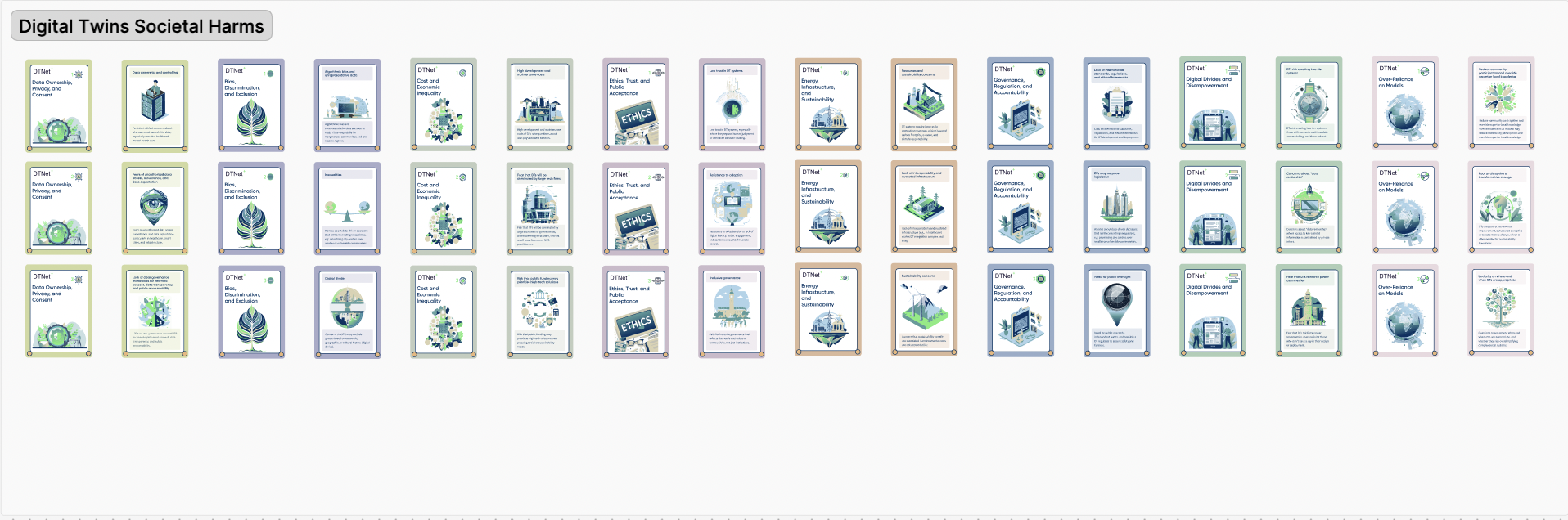
Societal harms for the following areas, as examples, are explored:
Data Ownership, Privacy, and Consent
Persistent ethical concerns about who owns and controls the data, especially sensitive health and mental health data.
Bias, Discrimination, and Exclusion
Algorithmic bias and unrepresentative data are seen as major risks – especially for marginalised communities and low-income regions.
Cost and Economic Inequality
High development and maintenance costs of Digital Twins raise questions about who pays and who benefits
Ethics, Trust, and Public Acceptance
Low trust in Digital Twins systems, especially where they replace human judgement or centralise decision-making.
Energy, Infrastructure, and Sustainability
Digital Twins systems require large-scale computing resources, raising issues of carbon footprint, e-waste, and climate responsibility.
Governance, Regulation, and Accountability
Lack of international standards, regulations, and ethical frameworks for Digital Twins development and deployment.
Game Cards
A skeleton card pack has been designed to help assess the societal impacts of Digital Twins.
Each card focuses on a specific theme, providing prompts that spark discussion, guide dialogue, and shape ideas for the future of Digital Twins.
This method was successfully used during our online workshop in March 2025, engaging 50 participants from a range of disciplines.


Upcoming Events
Join us for events that bring together researchers, practitioners, and stakeholders to exchange ideas, develop skills, and discuss the evolving role of Digital Twins in society.

Perspectives on the Societal Impact of Digital Twins Conference
The DTNet+ research community is pleased to announce the first Perspectives on the Societal Impact of Digital Twins Conference in March 2026. The conference will be held at Anglia Ruskin University, Cambridge, UK.

Writing Retreat
The DTNet+ research community invites Early Career Researchers to a dedicated writing retreat designed to provide time, space, and support for developing academic outputs. This event offers a collaborative environment where participants can focus on writing papers, abstracts, or project proposals while benefiting from peer feedback and informal mentoring. Location and dates will be confirmed soon.
Past Events
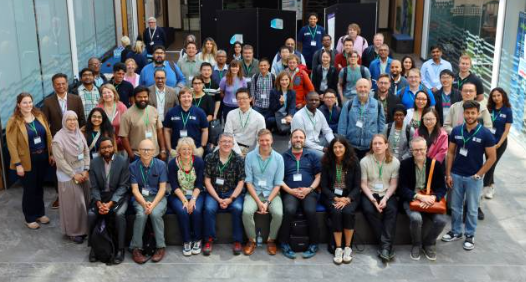
SIG Conference
16 – 17 June 2025
Swansea University

Online Workshop: Exploring the Societal Impacts of Digital Twins
26 March 2025

DTNet+ Pilot Sandpit
4 – 5 September 2024
Sheffield University

DTNet+ Ideation Meeting
27 – 28 June 2024
Ulster University
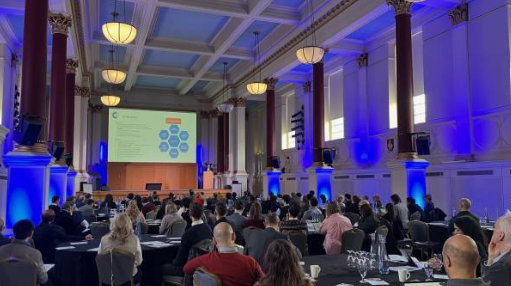
DTNet+ Launch Event
17 January 2024
BMA House (London)
 Societal Impacts of Digital Twins (Special Interest Group)